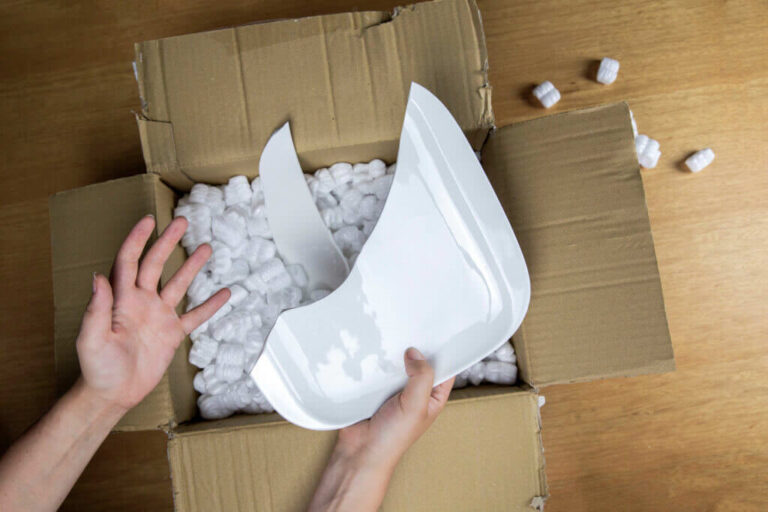
A product can survive manufacturing, quality checks, warehousing and order fulfilment, only to arrive at its destination damaged. Such an unfortunate delivery can cause far more harm than the immediate monetary loss. It eats into profit margins, creates customer service headaches and may require a product replacement, all while leaving a customer with a disappointing experience.
For e-commerce businesses, fulfilment centres, logistics operators and brands that ship products to customers, protective packaging plays a bigger role than simply keeping products in place inside a carton box. It helps protect the product, elevate the customer experience and ultimately reinforce the reputation behind the brand and business.
Damaged goods in transit: A real concern for Malaysian businesses
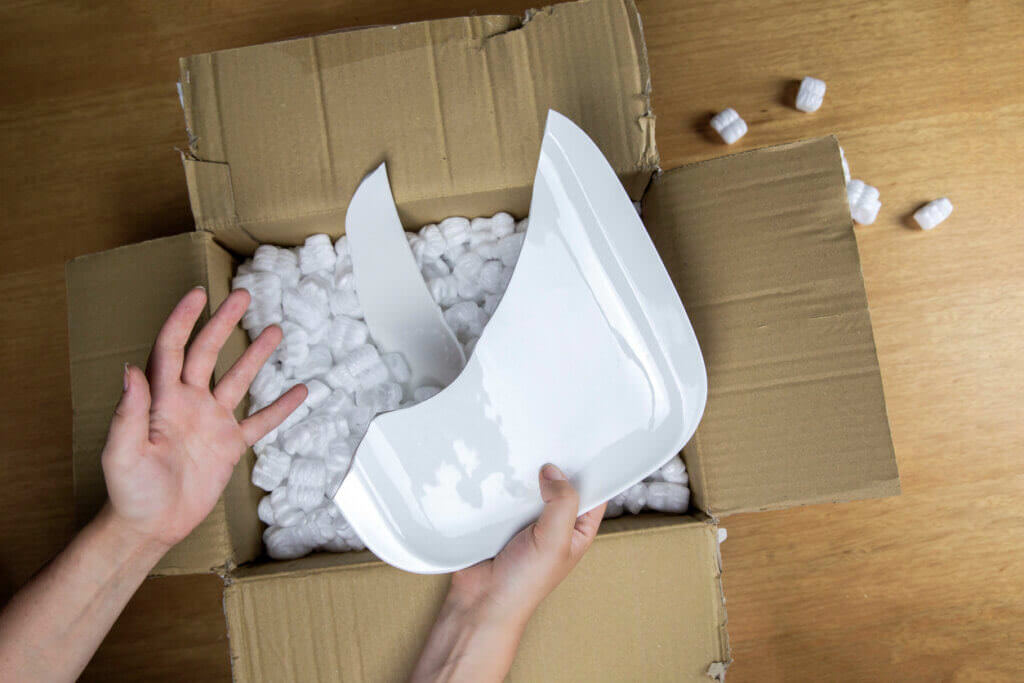
Poor packaging is not merely an occasional complaint from a particularly unhappy customer. It is a recognised concern in Malaysia’s e-commerce landscape. According to Suruhanjaya Persaingan Malaysia (Malaysia Competition Commission (MyCC)), 57% of surveyed consumers had encountered poor packaging when shopping through e-commerce marketplaces. The reported issues include insufficient protection, damaged outer packaging (sometimes we think the contents matter and the box does not. Not true!) and inappropriate handling during delivery.* The report also highlighted the various issues consumers face when shopping through online marketplaces.
Meanwhile, a September 2024 study by Milieu Insight found that 41% of Malaysian online shoppers identified damaged or missing packages as a delivery pain point. Among surveyed online sellers, 40% identified lost or damaged packages as a significant logistics issue.**
While these figures measure reported experiences and concerns, rather than the percentage of all parcels that arrive physically broken, they offer an important lesson for brands and businesses looking to up their game and nail down the customer experience. Packaging quality is a big part of that experience, and customers, ourselves included, notice when it falls short.
Sources:
* MyCC’s E-commerce Market Review (https://www.mycc.gov.my/sites/default/files/%5BBook%202%5D%20Draft%20final%20report%20(E-commerce%20retail%20marketplaces).pdf)
** Milieu Insight’s Malaysian online retail study (https://mili.eu/rising-costs-and-service-inconsistencies-threaten-malaysias-online-retail-growth/)
The true cost of damaged goods goes beyond the product
You might think glass, ceramics and other fragile goods are the only items that require reliable protective packaging. But far from it! These days, brands and businesses invest considerable resources in ensuring their outer packaging does more than simply catch the eye. Packaging can elevate brand standards, communicate product quality and become an integral part of the customer experience.
Think of premium electronics in presentation boxes, collectible action figures, books with pristine covers and sharp corners, collectible trading cards, and gift sets where the packaging is part of the appeal. The contents may remain perfectly alright, but a dented corner, crushed box or scratched surface can still leave a customer disappointed. For collectors and gift buyers in particular, the condition of the outer packaging can be just as important as the item inside.
When protective packaging fails, brands and businesses have much more to deal with than a damaged box.
1. The immediate financial cost
Beyond the replacement product, there may be additional packaging materials, another delivery charge, return shipping or an outright refund. The immediate financial impact can quickly eat into profit margins.
For businesses operating on tight margins, even a small number of damaged orders can quietly erode profitability. Some costs may be covered by insurance or recovered from other parties, but many still require time and effort to resolve. And as we shall see, the monetary cost is only part of the story.
2. The time and operational cost
Someone must respond to the complaint, verify the damage, process the refund or replacement, update records and arrange the next steps. Warehouse staff may need to repack another order, while customer service teams handle a problem that could potentially have been avoided.
For major e-commerce and third-party logistics (3PL) businesses, multiply this across hundreds or thousands of shipments, and the time spent managing exceptions becomes a genuine operational burden.
3. The reputational cost
Brands and businesses invest heavily in enhancing the customer experience. At SNAPP, we often talk about the WOW! Unboxing Experience, and for good reason. Customers rarely separate the product from the experience of receiving and unboxing it. Even when damage occurs during courier handling, inadequate protective packaging may leave the seller looking careless or unprofessional. After all, the customer sees the parcel that arrives at their doorstep, not the packing process behind it.
4. The cost to brand equity and customer confidence
A negative experience can undermine hard-earned brand equity. Brands and businesses invest heavily in product development, advertising, innovation and customer acquisition. Yet the final physical interaction with the customer may be a carton containing a damaged product.
It takes time, effort and money to earn customer confidence. A damaged delivery can put that investment at risk, particularly when a disappointing experience leads to a negative review or makes a customer think twice before ordering again.
Is your protective packaging actually doing its job?
It is important to note that not every damaged shipment is caused by inadequate protective packaging. Handling conditions, carton strength, product design and the nature of the item itself can all play a part. However, protective packaging deserves a closer look whenever damage occurs repeatedly.
Ask yourself a few practical questions when facing this problem:
- Does the product have sufficient cushioning against knocks and impacts?
- Can the item move around inside the carton during transit?
- Are fragile surfaces and vulnerable corners adequately protected?
- Is the cushioning suitable for the product’s weight, shape and fragility?
- Could product bracing be improved to keep the item securely in place?
- Are staff using the right amount and type of protective material consistently?
Too little cushioning can leave a product vulnerable. Too much, or the wrong type, can waste materials, packing time and storage space without necessarily providing better protection. The objective is not to wrap every product in as much material as possible. How often have we seen a product surrounded by half a dozen rolls of bubble wrap? More importantly, the aim is to identify a suitable protective packaging solution for the product, carton and shipping conditions.
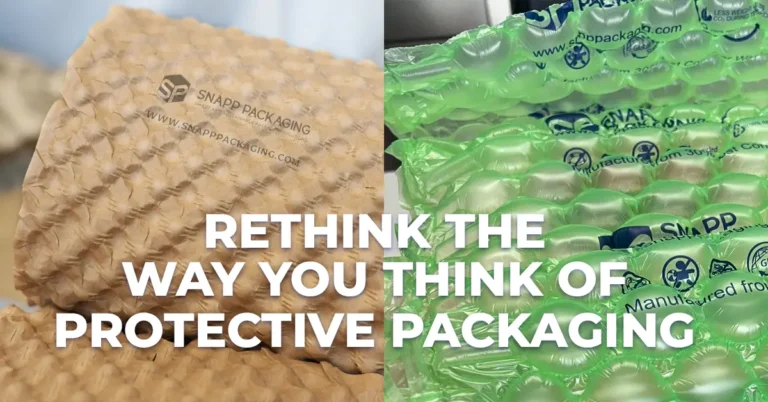
Rethink the way you protect products with LAPIS AIR and NEST PAPER
Better protection does not have to mean a more expensive packing operation. Far from it!
At SNAPP Packaging, we believe protective packaging should do more than fill a carton. It should support the way businesses pack, protect, present and deliver their products. We believe in creating that WOW! Unboxing Experience without breaking the bank. Our LAPIS AIR and NEST PAPER solutions offer uniquely different approaches to protective packaging, depending on your products and operational requirements.
LAPIS AIR: Essential protection when you need it
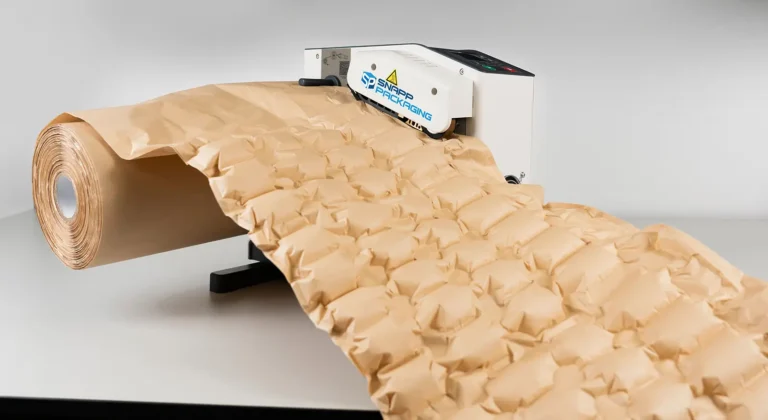
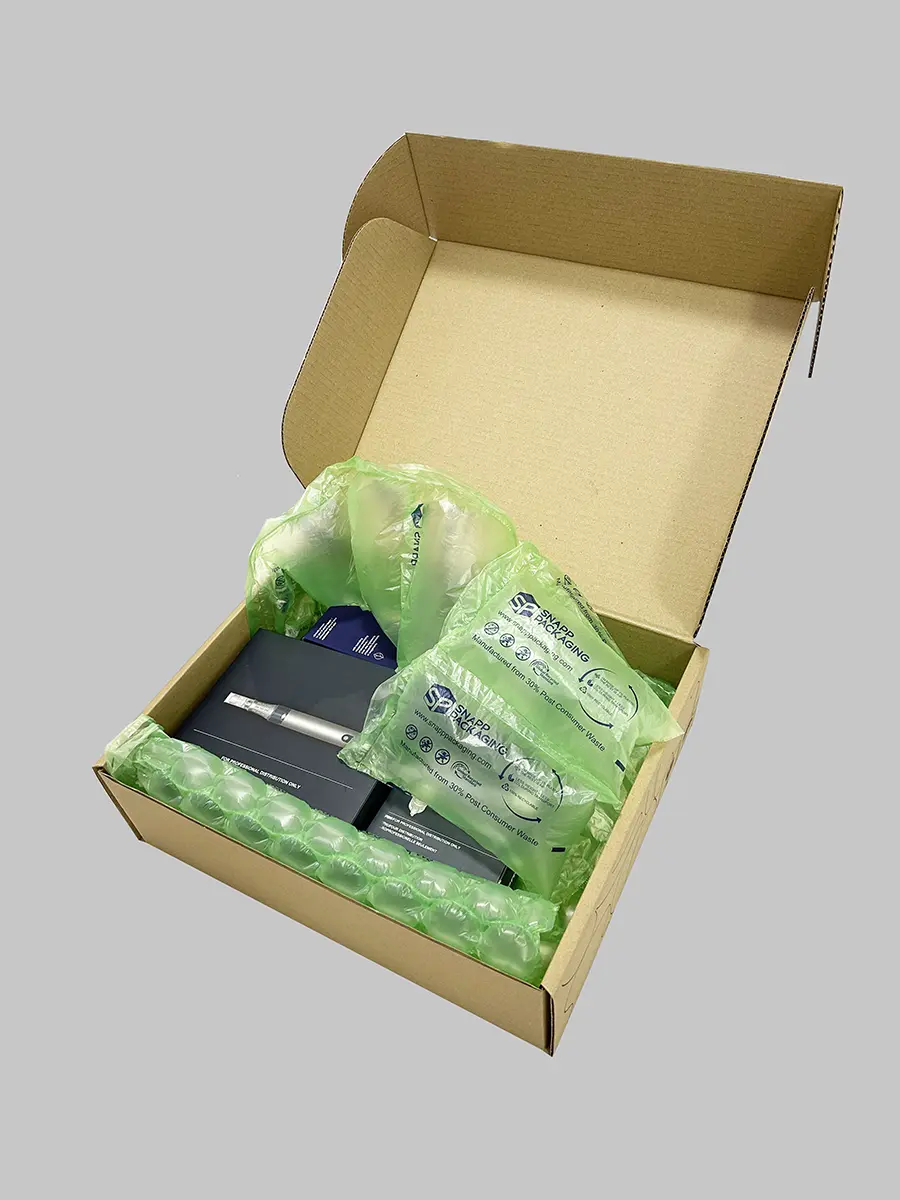
LAPIS AIR is an on-demand air protective packaging system that turns compact film rolls into inflated air bubble and void protective packaging at the packing station. Instead of storing large volumes of pre-inflated bubble wrap, businesses store compact film rolls and inflate the material when needed. This can help reduce protective packaging storage requirements while supporting everyday packing and fulfilment operations.
Made with 30% post-consumer waste, LAPIS AIR offers a practical option for businesses looking to rethink their use of conventional plastic bubble wrap while making better use of valuable warehouse space.
NEST PAPER: Paper-based protection with a different approach
For businesses looking to introduce or incorporate paper-based protective packaging, NEST PAPER offers two options to consider.
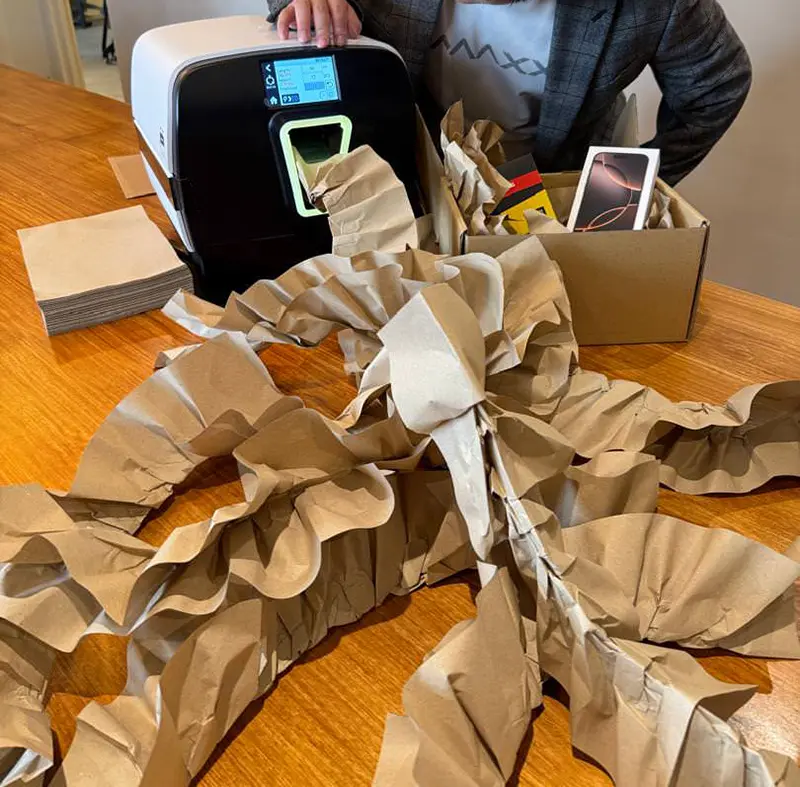
NEST PAPER Cushion provides a paper-based cushioning system designed to protect products while bringing a more refined presentation to the packing experience.
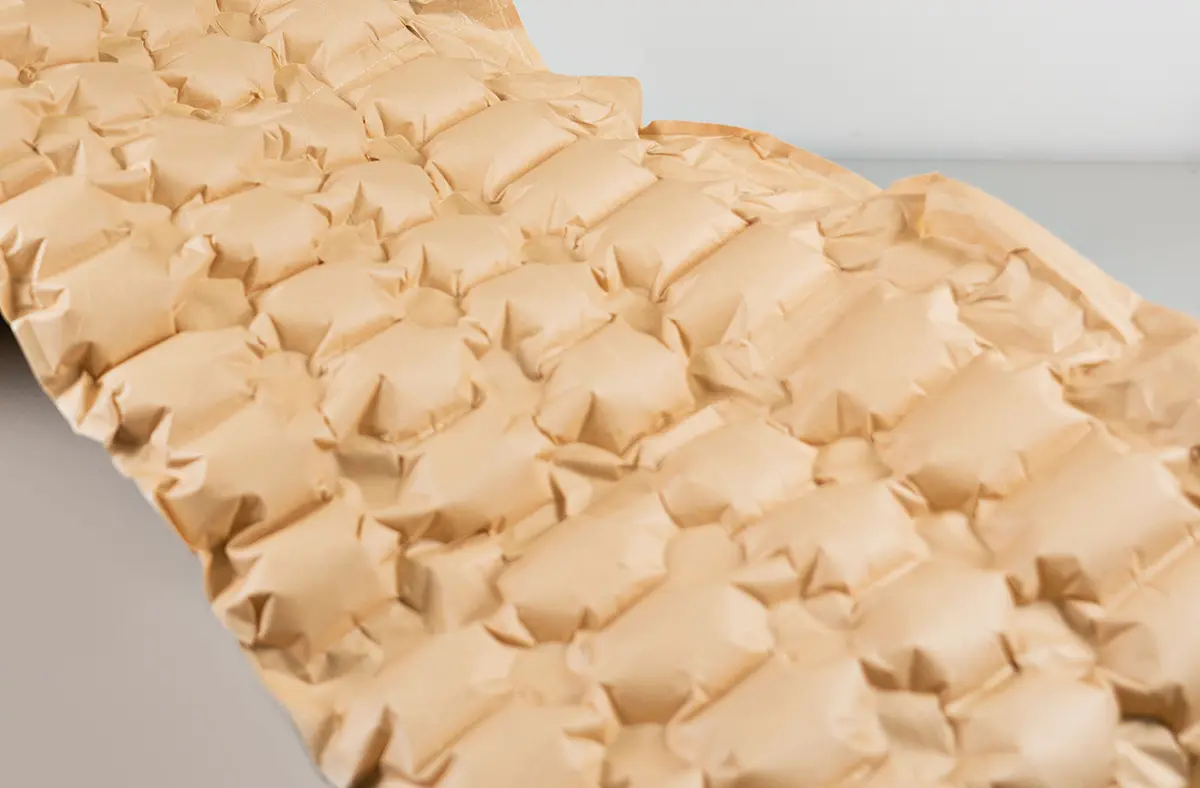
NEST PAPER Wrap offers a paper-based alternative to conventional plastic bubble wrap, helping businesses cushion and protect products in transit while presenting them in a more considered way.
Better protection begins with better packaging decisions
LAPIS AIR and NEST PAPER offer different approaches to protective packaging, helping businesses explore better ways to protect products, manage materials and improve presentation. The right choice depends on the product, the protection required, the packing workflow and the overall cost per shipment. And we are ready to help you assess the actual needs of your brand and business, rather than choosing packaging based on material type and price alone.

There is no single protective packaging solution that suits every product, nor can any packaging material guarantee that damage will never happen. What we can do is make better-informed decisions together. Review recurring damage, understand where protection may be falling short, choose suitable materials and improve the overall packing and fulfilment process.
When you consider the cost of replacements, extra handling, customer complaints and lost confidence, taking a closer look at your protective packaging simply makes good business sense. Since 2004, we have been helping businesses rethink protective packaging around the realities of modern packing, fulfilment and delivery. To date, LAPIS AIR and NEST PAPER solutions have protected thousands of product shipments throughout.
Get in touch with SNAPP for a live demo and to explore unique approaches to improving your packaging. Let’s explore practical protective packaging options and solutions together.